
PromoFarma: +39% organic clicks and 14 million AI impressions in 3 months
How an SEO and GEO content strategy increased PromoFarma’s visibility in Google’s AI answers without slowing organic traffic growth.
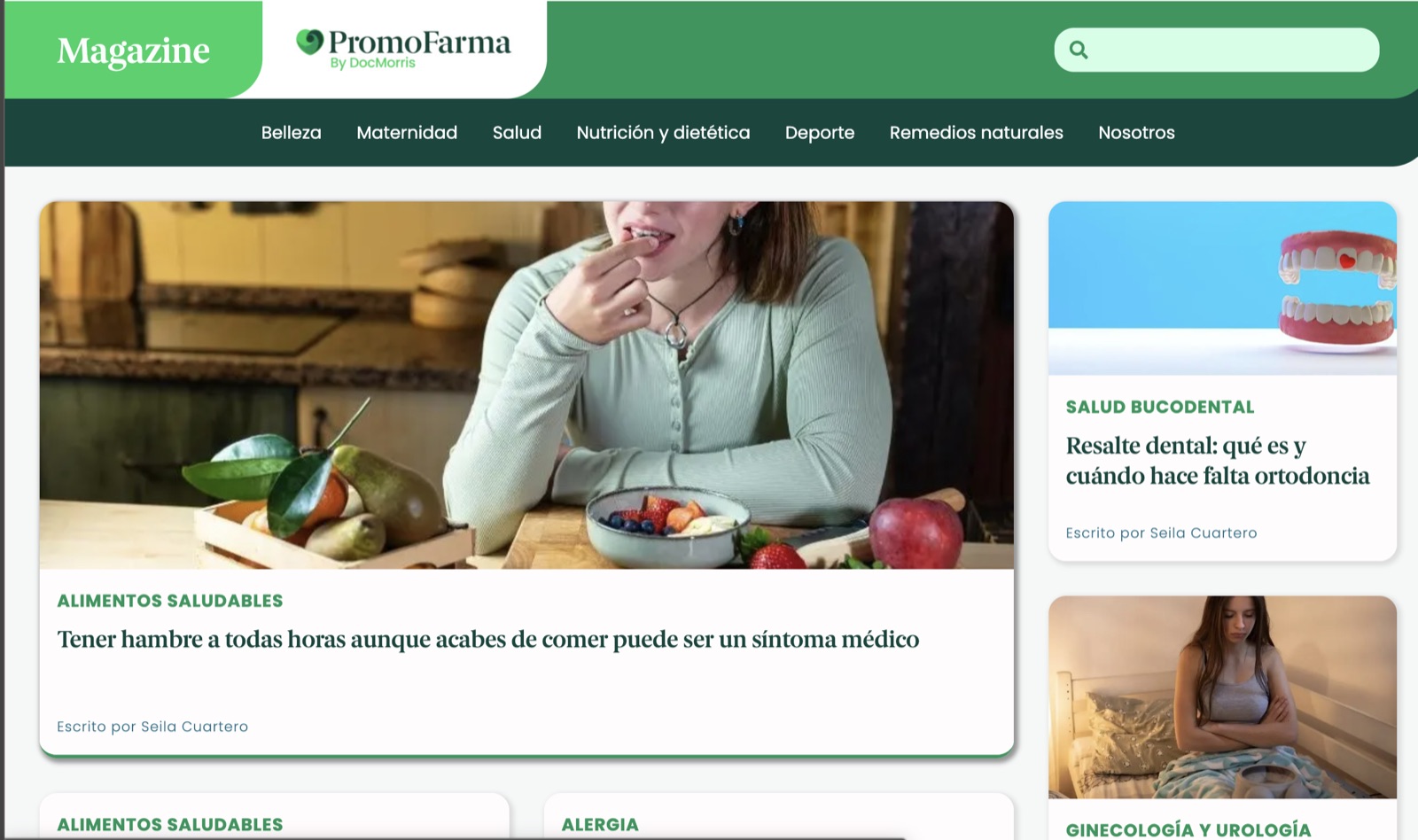
PromoFarma is an online pharmacy and parapharmacy marketplace. Keytrends produces the content for its blog, PromoFarma Mag, and already did so in 2024.
The challenge: keep growing when AI answers before your website does
PromoFarma was not starting from zero, because the blog already had a lot of traffic. Three things held it back:
- Google answers more and more questions with its AI, inside the search itself. The AI had to cite PromoFarma and users had to keep visiting the blog.
- With more than 1,000 URLs with traffic, every new topic has to add something. If two pages on the same site compete for the same search (cannibalization), both lose.
- Health, nutrition and parapharmacy is a highly competitive sector, with media outlets, clinics and online pharmacies in the same searches.
What we did: each lever avoids a problem
Keytrends handles the whole blog, from strategy to publication. GEO structure means writing so that AIs can cite the content.
Write with GEO structure: a direct answer, a clear definition and sourced data.
→Avoids the AI citing others, or citing PromoFarma without giving users a reason to click.
Choose every topic using search trend data.
→Avoids writing about assumptions with no real demand.
Check every topic against the blog’s content repository.
→Avoids duplicating or cannibalizing what is already published: if it exists, it gets optimized.
Measure in Keytrends which ChatGPT and AI Mode prompts (Google’s conversational answer mode) cite the blog.
→Avoids optimizing AI visibility blindly.
Evergreen headlines (that keep working over time) for search and specific titles for Google Discover (Google’s recommendation feed).
→Avoids a headline built for one channel failing on the other.
Optimize already published URLs and review results every week.
→Avoids content that stops gaining positions.
Results: AI cites PromoFarma and users still click
More than one in four blog impressions (27%) happens inside a Google AI answer.
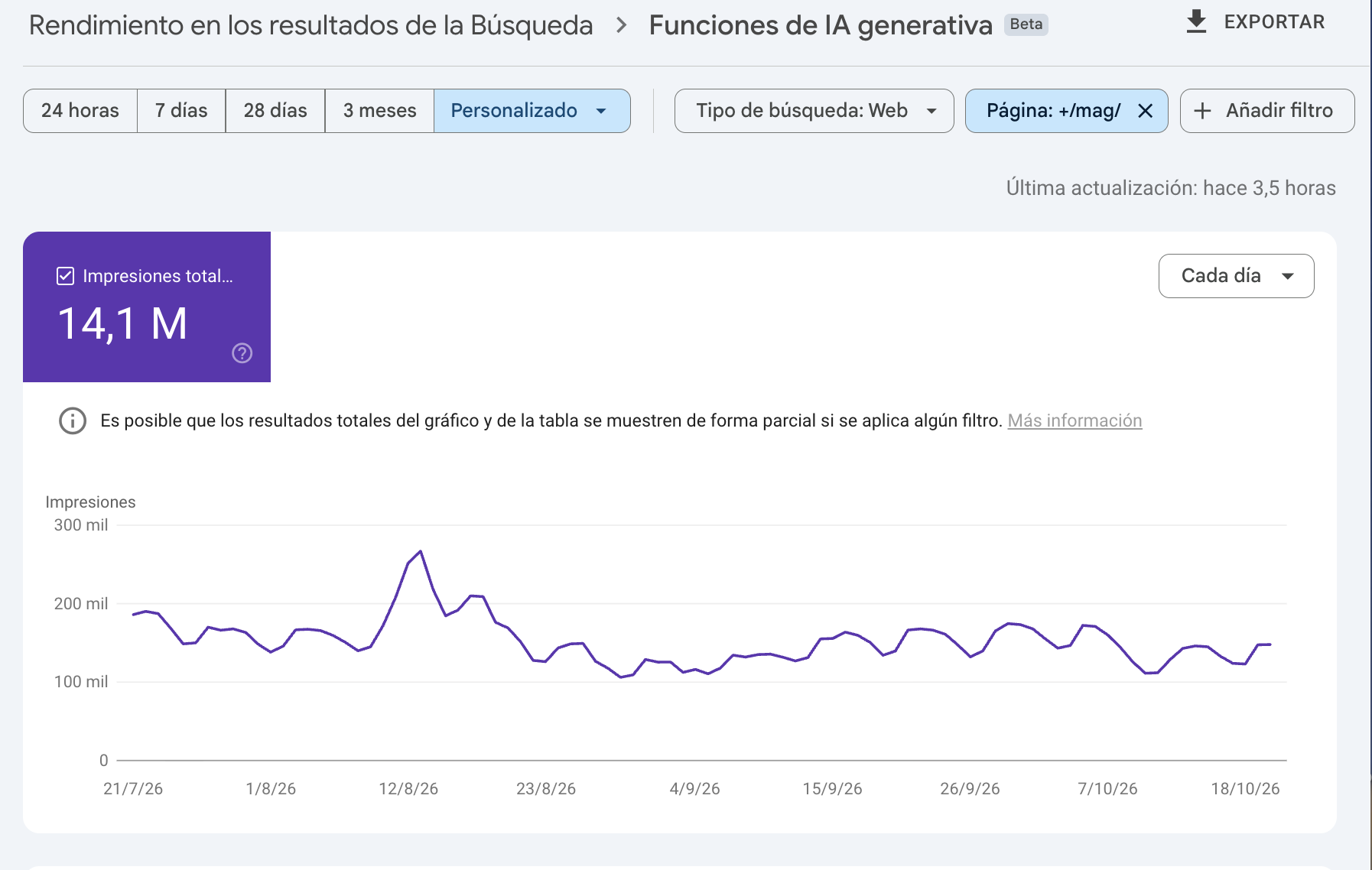
Being cited by the AI does not prevent a piece from generating visits. In the best case, a piece gets 52% of its impressions inside the AI and 4.6 out of every 100 people who see the answer click through to the site.
The most complete pieces keep between 2 and 4.6 clicks per 100 impressions. Short-answer questions drop below 1, because the AI resolves them on its own. They are the optimization priority.
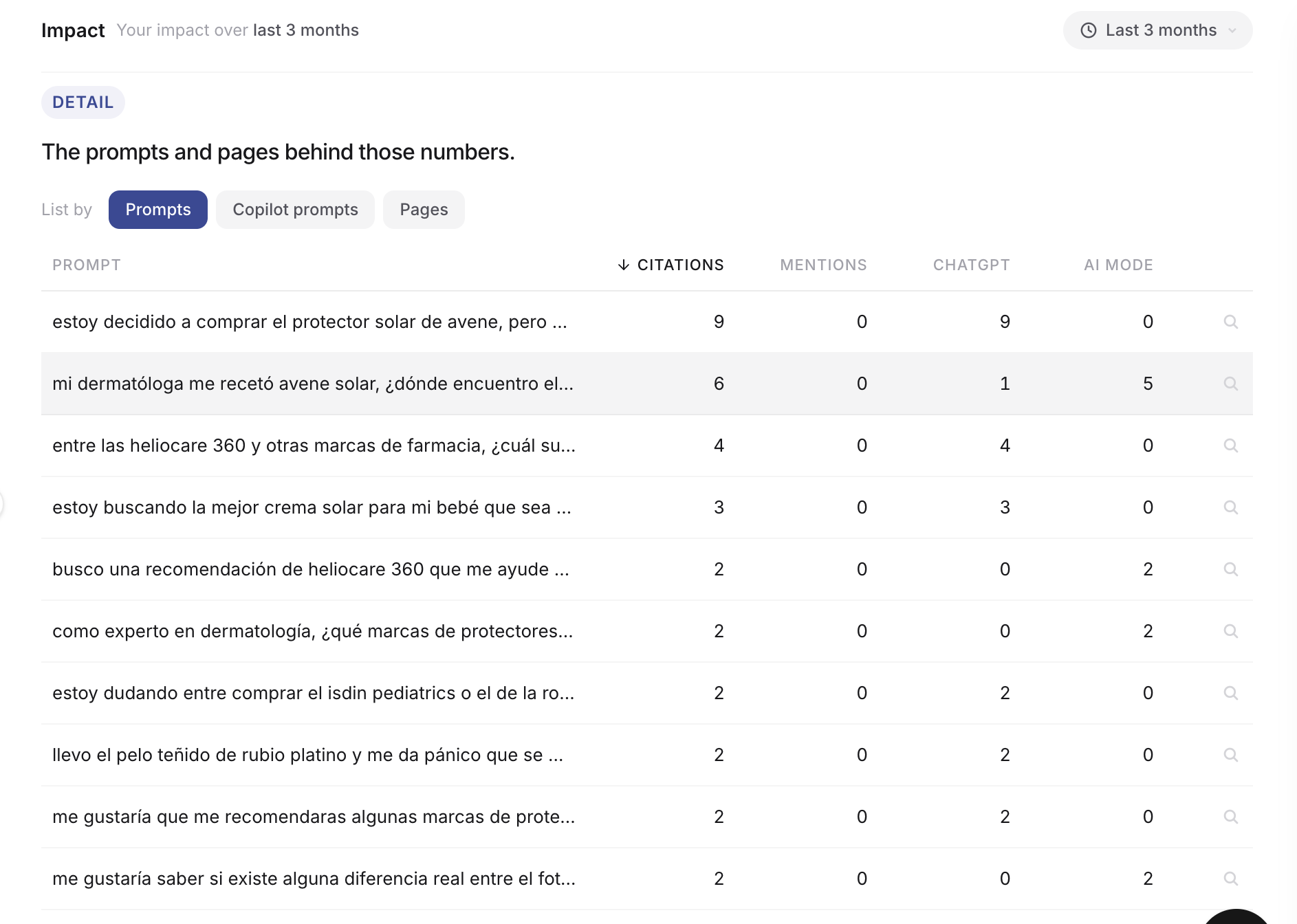
Outside Google there are citations too: 53 in ChatGPT and 32 in AI Mode over the last 3 months, according to Keytrends tracking.
Growth does not depend on a spike either: the top URL accounts for 5% of clicks and the top 50 for 36%.
* The Search Console generative AI report is in beta and has no 2025 history, so this figure cannot be compared year over year.
If you want to see how much of your blog already appears in AI answers, we will show you with your own data.
Want the same results on your blog?
Book 30 minutes and we will go through it with your data, as we did with PromoFarma.